EP007 Daniel Defoe, “Robinson Crusoe”

Before Wilson’s smile graced the big screen, there were stories of men lost to battle the forces of nature with very little but their wits. Daniel Defoe wrote one of these stories, Robinson Crusoe. Now, Robinson Crusoe certainly wasn’t alone with nothing but his wits. He had many things which he found and which he was able to use. But one of the most intriguing factors of Defoe’s book is something Wilson (and his lost companion) never really mentioned—Providence. Crusoe believed his purpose on his island, as he came to call it, was superseded by a greater purpose. That Providence had a hand in it all. And yet at the same time, his success on the island was at the same time the result of his own labor, his pulling himself up. Come join us as we talk about this tension in Daniel Defoe’s book, Robinson Crusoe.

If you’d like to purchase any of the books, please use the links listed below to support Lies Speaking Truth.


Edition Reviewed:

Robinson Crusoe

Links of Interest:

James W. Sire, The Universe Next Door

Gene E. Veith, Reading Between the Lines

Wikipedia on Robinson Crusoe

The Movie (1997)

An Older Movie (1954)

Free Online Version

Alister McGrath, Luther’s Theology of the Cross: Martin Luther’s Theological Breakthrough

Gerhard Forde, On Being a Theologian of the Cross: Reflections on Luther’s Heidelberg Disputation, 1518 (Theology)

Oswald Bayer, Martin Luther’s Theology: A Contemporary Interpretation

Next Review:

Stephen R. Lawhead, The Skin Map

EP006 George R.R. Martin “Game of Thrones”

Ever been interested in politics? How would politics change if you had a dragon on side and hordes of ice-breathing monsters on the other? What if everyone in the middle was most concerned about himself or herself? Welcome to the Game of Thrones. While in many ways it’s like a game of chess, it’s very different in one respect—in this game either you win or you die.

If you’re planning to purchase the book, please use the links below to support Lies Speaking Truth.

Edition Reviewed:

George R. R. Martin: A Game of Thrones

Links of Interest:

James W. Sire, The Universe Next Door

Gene E. Veith, Reading Between the Lines

George R. R. Martin’s Site

Official HBO Website

Game of Thrones Wiki

A cool map of the Seven Kingdoms

Our Next Review:

Daniel Defoe, Robinson Crusoe

EP005 Dean Koontz “77 Shadow Street”

In a world obsessed with healthcare, we often struggle with the limits of technology and health. Is it ethically right to advance ourselves through technology? Can we use technology to make ourselves more than human? Can we become posthuman? As a culture, we are obsessed with technology, especially when technology goes awry. Dean Koontz explores the philosophical movement of posthumanism through the use of a horror-house story, 77 Shadow Street.

If you’re planning to purchase the book, please use the links below to support Lies Speaking Truth.

Edition Reviewed:

77 Shadow Street

Links of Interest:

http://www.posthumanism.com/
http://en.wikipedia.org/wiki/Posthumanism
the Wikipedia link is really vague and largely unhelpful
http://www.transhumanism.org/resources/FAQv21.pdf
This guy from Oxford seems to have a bit written on the subject:
http://www.nickbostrom.com/
http://www.firstthings.com/blogs/secondhandsmoke/ (Medical ethics)
http://www.syfy.com/caprica (on recording of the soul)

http://www.wesleyjsmith.com/bio/

Other Books of Interest:

From Human to Posthuman

Culture of Death

Our Next Review:

George R. R. Martin Game of Thrones: A Song of Ice and Fire

EP004 Rick Riordan “The Lost Hero”

The ancient gods of Greece and Rome were powerful . . . and annoying. They influenced the lives of humanity, often in petty ways. They were licentious, having intercourse with mortals and thereby giving rise to offspring that were half-human and half-god. Demigods. One of the most famous is of course Hercules. But there were many others. Zeus kept many human consorts, as did most of the other gods.

Now what if, just what if, these gods still existed today? What if they lived in America and toyed with the affairs of Americans? What if the titanic struggles between the gods still happened? What would Zeus look like as American? What if the gods still had to defend Olympus from invaders? What if demigods still lived among us?

If you’re planning to purchase the book, please use the links below to support Lies Speaking Truth.

Edition Reviewed:

The Lost Hero (Heroes of Olympus, Book 1)

Links of Interest:

The Son of Neptune [The Heroes of Olympus Book 2]

Other books by Rick Riordan mentioned in the podcast

Wikipedia on Steampunk

The Greek Myths: Complete Edition (Robert Graves)

http://geek-life.com/2010/10/18/book-review-the-lost-hero-by-rick-riordan/
This Author points out the differences between the Percy Jackson and Lost Hero. Evidently the Percy Jackson/Olympian series is 1st person rather than third.

http://www.commonsensemedia.org/book-reviews/lost-hero-heroes-olympus-book-1
Interesting resource with some decent tools for analyzing the book.

Our Next Review: Jonathan Swift, Gulliver’s Travels


George Orwell and Christopher Hitchens

In a recent episode of Issues Etc. (The Legacy of Atheist Christopher Hitchens), Douglas Wilson mentioned that George Orwell was the hero of Christopher Hitchens. Christopher Hitchens, the renowned atheist who died last week, is described in the episode as a “born contrarian.” This might explain some of the questions from our recent podcast (EP003 George Orwell “1984”). Hitchens held uncommon positions for atheists, including being pro-life and supporting the conflict in Iraq. He did not care for what Orwell called “smelly little orthodoxies,” that is, positions and beliefs held for non-intellectual reasons. Instead, he followed Orwell as a freethinker and “born contrarian.”
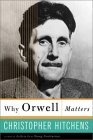
Hitchens wrote a book in honor of his hero: Why Orwell Matters. In 1992, Hitchens was interview on the BBC regarding this book. One of the helpful comments from Hitchens regards the use of this book by a socialist (Orwell) in an anti-socialist context:

Christopher Hitchens on George Orwell – George Orwell Links:

Andrew Marr Can writers have anything like the same impact now because, I mean, you were saying earlier on, of course Orwell was in his lifetime limited to certain relatively small publications, couldn’t get his books out, all that kind of stuff. Never the less, partly because of the cold war, he was given an enormous boost, he was driven into every classroom in the western world and he was, you know, Penguin were producing vast, vast quantities. When it comes to political argument, of the kind you do now, most of it is really at the edges now, it’s small magazines, it’s groups of devotees in different countries who read small publication, books and so on. Do you think that, in the age of television, in the age of all this stuff, that the individual, the independent writer can still have a decisive influence anywhere?

Christopher Hitchens Well, I think it’s more than a pious hope, yes, I think that it’s surprising how in moments of crisis, which will recur, have occurred recently, people suddenly feel they wouldn’t mind reading someone who took things seriously. His sales always go up at such times as do the sales of people Alexander Solzhenitsyn and others who’ve sort of witnessed for historic truth and so on. There aren’t very many of them at the moment no. By the way, I didn’t want you, you made a very good point, about the way that he was sort of forced into the schoolroom. Partly what I’ve tried to do in this book is to rescue him from the sort of goody-goody plaster saint image that’s been imposed on him. He was always a figure of controversy and he didn’t want, he would never have dreamt he’d be given as a good example to schoolchildren, it would have been a revolting idea. And that all depends on using a certain cannon of his, a very limited one, 1984 and Animal Farm as cold war parodies or parables. That’s, he would have seen that was propagandistic in itself, and indeed, gave very strong instructions on his death bed that, that’s not how the books were to be read.

via

EP003 George Orwell “1984”

“Big Brother is always watching.” In the book 1984, George Orwell paints a horrifying picture of socialism gone awry. In a few ways Orwell’s warning still rings true. But does it still have the same punch it had in 1949? Does it still warn us of a possible future? Come with us on this episode as we examine and reflect on the future—the year 1984.

Edition Reviewed:

1984

Links of Interest:

Wikipedia on 1984

Free Online Edition of the 1984, though I’m not sure if it’s legit or not.

Tractatus Logico Theologicus 4 edition (John Warwick Montgomery)

Our Next Review: Rick Riordan, The Lost Hero

If you’re planning to purchase the book, please use the links above to support LiesSpeakingTruth.org.

EP002 Suzanne Collins “The Hunger Games”

Our first episode discussed the consequences of no authority. In this episode, we explore the consequences of abusive authority. What happens when the authority becomes the enemy? The Hunger Games by Suzanne Collins tells the story of an authority that will go to any length to maintain its authority.

At the same time, another prominent theme in the book revolves around our entertainment and to what degree our entertainment affects us. Where do we draw the line between entertainment and murder, or abuse?

Edition Reviewed:

The Hunger Games

Links of Note:

The Official Site of Hunger Games, the Movie

The Official Website of the Series

Our Next Review: George Orwell, Nineteen Eighty-Four

If you’re planning to purchase the book, please use the links above to support LiesSpeakingTruth.org.


EP001 William Golding’s “Lord of the Flies”

What happens when man is left to himself? Are we essentially good, loving and caring for others, or will we revert to our “primal” man? Or is it something entirely different?

The Lord of the Flies gives the picture of man when all authority is removed. One of the ways which God uses to govern the world is through authority, beginning with parents, including teachers and rulers, and even employers. When this authority is removed what is left? William Golding explores this theme as he tells the story of a few boys who lose all authority. The story, haunting though it might be, is the story of how The Lord of the Flies can inspire even the most seemingly pure of among us to do evil deeds.

Edition reviewed:
Lord of the Flies (50th Anniversary Edition)

Links discussed:
Wikipedia entry: http://en.wikipedia.org/wiki/Lord_of_the_flies
Gospel Patterns in Literature: Familiar Truths in Unexpected Places
Reading Between the Lines: A Christian Guide to Literature (Turning Point Christian Worldview Series)
The Universe Next Door: A Basic Worldview Catalog, 5th Edition

Our next review: Suzanne Collins “The Hunger Games”
The Hunger Games